
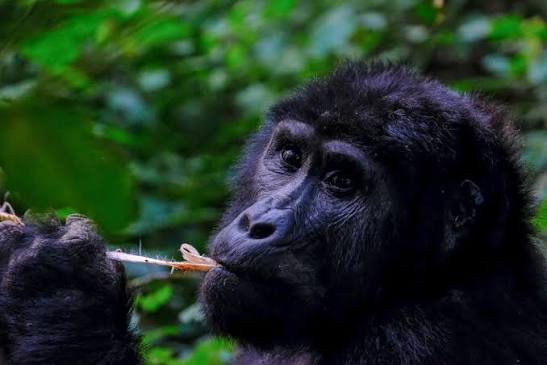
Gorilla conservation in Uganda is one of the most outstanding ways of protecting wildlife in the world. Uganda protects almost half of the world’s population of these endangered species, thus playing a pivotal role in their preservation and maintaining ecological balance and supporting biodiversity.
Different activities such as scientific research, financial support, responsible tourism and conservation partnerships from all over the world and other conservation related activities does Uganda continuously make efforts to preserve mountain gorilla for centuries.
Gorilla Conservation in Uganda
Uganda is one of the few countries in the world where visitors can encounter endangered mountain gorillas in their natural habitat. Gorilla trekking takes place in two protected national parks, each offering a unique opportunity to experience these remarkable primates while exploring Uganda’s beautiful forests.
Destinations for mountain gorillas in Uganda
Mountain gorillas are rare located in East African region in three countries namely Uganda, Rwanda and the DR. Congo. However, Uganda holds the largest portion of them, making it the best gorilla destination.
Uganda has two national parks where these endangered species are located which are Bwindi Impenetrable National Park and Mgahinga Gorilla National Park.
Bwindi Impenetrable National Park.
This is seated in south western Uganda, about 520 kilometers from the country’s capital-Kampala. The park is mountainous, with cool climate that is a safe place for the mountain gorillas.
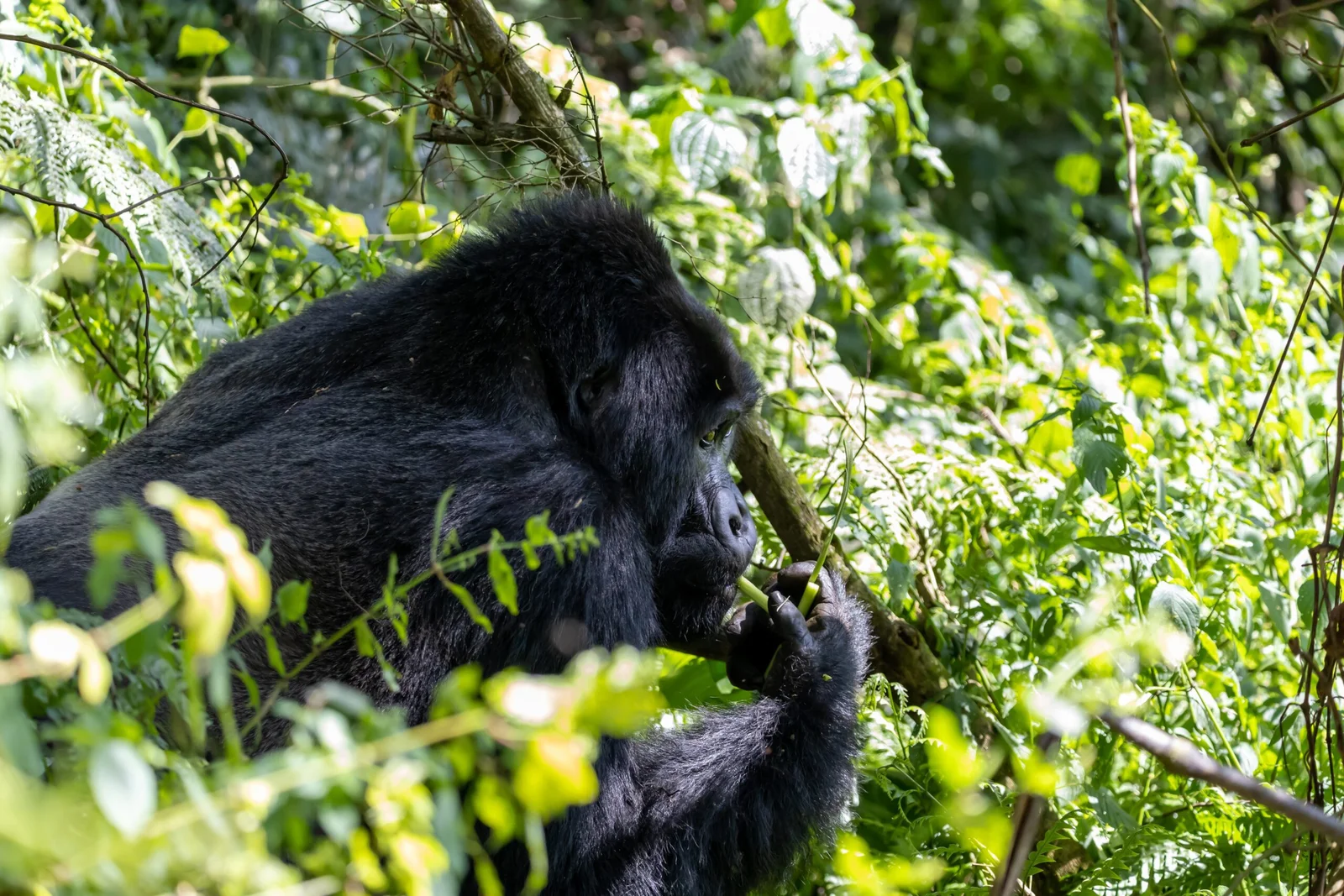
Bwindi National Park has proved to be the center of excellence in regards to gorilla conservation in Uganda and the world. It is divided into 4 gorilla trekking sectors namely Rushaga, Nkuringo, Buhoma and Ruhija. These places provide quick access to the different gorilla groups. This was initiated in a bid to conserve the species through responsible tourism.
Mgahinga Gorilla National Park
Mgahinga Gorilla National Park also seats in south western Uganda and plays a key role in preserving about 11 members of Virunga mountain gorillas. The sector here is called Ntebeko and the family is referred to as Nyakagezi.
The park is characterized montane forests, bamboo vegetation and other habitats used by the species. Being combined with Bwindi, they make Uganda a leading destination for gorilla conservation around the globe.
Why Gorilla conservation in Uganda is important?
Supports tourism and national revenue:
Numerous visitors come from all over the world to spend some time with mountain gorillas under strict rules and regulations aimed at preserving the species.
Through permit purchase that is recommended before gorilla trekking, the country gets revenue that supports employment in communities around protected areas. Other income generating activities include transport, guiding and accommodation among others.
Protects bio diversity:
Gorilla also make up part of the ecosystem of the forest. So, as they move around their habitats feeding on leaves, bamboo shoots fruits stems and other foliage, they contribute to process that keep the forest healthy.
However, the forests do not host only gorillas but also other wildlife such as reptiles, amphibians, monkeys, forest birds, insects, butterflies and rare plant life. Therefore, gorilla conservation also gives a home for a broader group of Uganda’s nature.
Advancing scientific knowledge:
Gorillas have proved to have a genetic heritage with humans, which has made them intriguing for research. Through this, more knowledge is displayed in regards to their family structure feeding ecology, population dynamics and reproduction and responses to environmental change.
Preserving Uganda’s natural heritage:
Gorillas are a source of prestige for Uganda since it has the largest portion of the world’s entire population. For the fact that they have been maintained and preserved for a long time reflects Uganda’s aim, determination and commitment to conserve them for generations.
Conservation also gives avenue for cultural exchange, environmental education and community participation in managing resources.
Maintaining healthy forest ecosystems:
Mountain gorillas also contribute to a health forest through dispersal of seeds. When they feed and locomote at the same time, there are chances of scattering seeds which means plants will regenerate.
Threats for Gorilla Conservation in Uganda
Mountain gorillas are still one of the most threatened species in the world despite the endless conservation measures. Their restricted distribution, slow reproduction and dependence on specific habitats means that even small deaths affect their population growth. There are human activities that are a major threat to these species.
Poaching:
This is one of the greatest threats to many wildlife species. Hunters who go to the forest in search for smaller animals such as antelopes and other forest animals. They set snares for them and then gorillas end up into the traps, which results into major injuries and later infections or death.
Infectious Diseases:
Mountain gorillas are very prone to human disease transmission more so because they have a genetic similarity with them. Diseases can also come when the gorillas come into contact with waste or other contaminated materials.
Habitat loss due to increase in Human Population:
Gorilla are very threatened by displacement and this has happened for the longest time possible. The rapid population growth and demand for agricultural land often lead to displacement of wildlife. In south western Uganda, settlements border gorilla habitats. Land outside these gazetted areas is usually converted into cultivation land thus riding the primates of a home.
Climate change:
Climate change of rainfall patterns, temperature, vegetation. These change food resources, forest composition and ecological conditions that gorillas depend on. The effects vary across all gorilla locations. Conserving forests and restoring spoilt habitats and incorporating climate considerations into park management can help rebuild and strengthen the ecosystem resilience.
Human-wildlife conflict:
Wildlife (gorillas inclusive) tend to encroach on human farm land, creating tension between the two parties. Crop losses and other destructions grieve humans since they lose out on food security. Therefore, concerned authorities must find ways to restrict the animals from invading human land. It will also save the wildlife from being killed by people, reducing their numbers.
Financial limitations:
Gorilla conservation requires funding for veterinary care, trained personnel, equipment, infrastructure and many others. Financial limitations therefore cut short these services that are meant to conserve and preserve the mountain gorillas for generations.
Strategies of Gorilla Conservation in Uganda
Anti-Poaching Campaigns, Patrols and Law Enforcement:
Poaching is one of the main threats towards gorillas. The traps these humans set for small creature end up capturing mountain gorillas, posing serious injuries that lead infections and death.
As result Uganda Wildlife Authority, ensures that park rangers are available not only in gorilla habitats but also in other wildlife gazetted areas. These are very intentional towards consistent patrols to seize unauthorized entry, poachers and snares.
Veterinary Care and Disease Prevention:
Mountain gorilla are highly susceptible to human diseases. This is one of the reasons why UWA gives strict rules in regards to how many people visit a gorilla family each day, the distance to maintain and the time spent with them.
Veterinary programs are also in place such as gorilla doctors monitor and treat the species when necessary. They assess individuals, investigate illnesses and intervene where the expected conservation benefits justify the risks.
Regulated Gorilla Tourism:
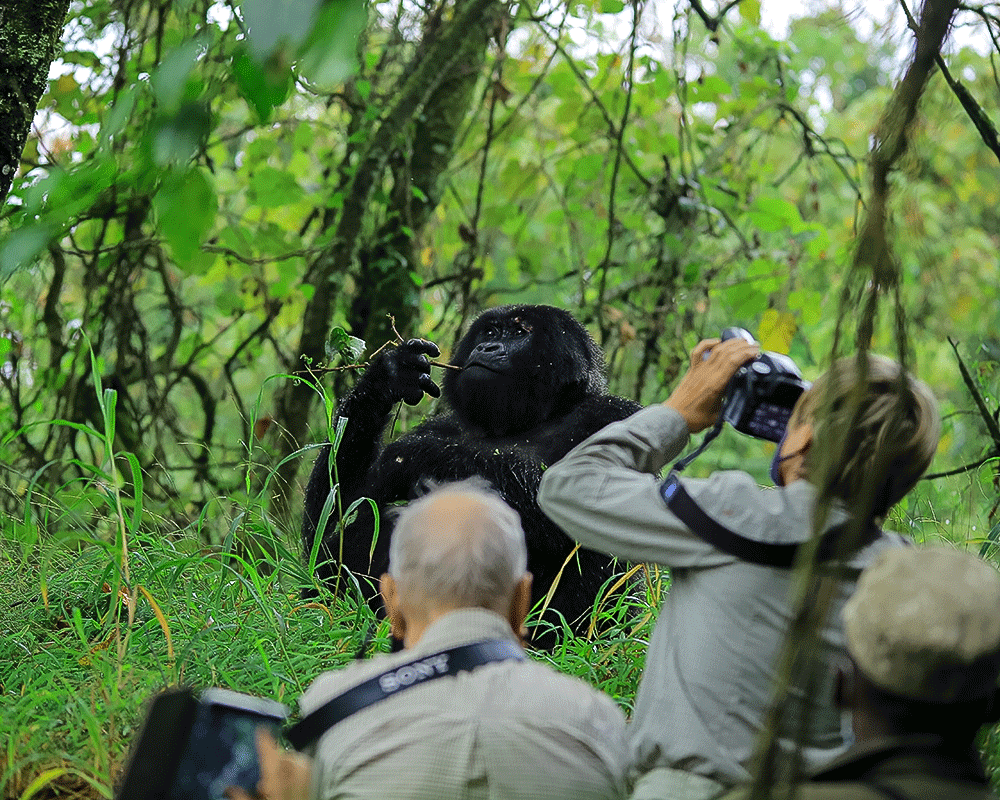
Gorilla conservation in Uganda also entails regulation of gorilla tourism. Visitors who come to Bwindi and Mgahinga Gorilla National Park are given strict rules and regulation such as do not feed the species, maintain a safe distance of about 8-10meters, do not litter in the forest and many more. This is aimed at keeping the species safe from human activities.
Public Awareness & Community Education:
In Uganda, conservation in Uganda goes further into the education system. It also goes to the communities especially those neighboring the gorilla habitats. Campaigns through activities such as the Virunga Marathon and Gorilla Festival in Uganda, create awareness about mountain gorillas and the importance of conserving them.
Monitoring & Scientific research:
Consistent scientific research provides updated information about mountain gorillas in regards to social behavior, feeding habits, health and habitat requirements. Researchers use direct observations of gorilla families, nest surveys and field monitoring. They methods estimates population size, identify relationships between groups and detect changes over time.
Protection of Natural Habitats:
Mountain gorillas require stable and suitable forest environments that provide food, nesting sites and shelter for normal social behavior. Uganda protects mountain gorillas in Bwindi Impenetrable National Park and Mgahinga Gorilla National Park. Then park manages activities such as unauthorized access, prevent illegal resource extraction and forest conditions.
In conclusion, gorilla conservation is a major activity for connecting biodiversity protection with methods such as community development, scientific research and responsible tourism. Bwindi and Mgahinga Gorilla National Park play an essential role in the conservation process by providing essential habitats for the rare species and other species.
Frequently Asked Questions about Gorilla Conservation in Uganda.
1. Why is gorilla conservation in Uganda important?
Gorilla conservation protects endangered mountain gorillas, maintains forest biodiversity, supports scientific research and contributes to tourism and community development.
2. Where are mountain gorillas protected in Uganda?
Bwindi Impenetrable National Park and Mgahinga Gorilla National Park in southwestern Uganda.
3. What are the main threats to gorilla conservation in Uganda?
Habitat loss, infectious diseases, accidental snaring, human-wildlife conflict and climate change.
4. How does gorilla trekking support conservation in Uganda?
Revenue from gorilla trekking permits helps support protected-area management, conservation activities and surrounding communities.
5. How can tourists contribute to gorilla conservation in Uganda?
Visitors can contribute by choosing responsible tour operators, following trekking regulations, respecting wildlife viewing distances and supporting community-based tourism.
Plan Your Gorilla Trekking Safari in Uganda
Experience Uganda’s remarkable mountain gorillas while supporting responsible wildlife tourism and conservation.
At Silverback Gorilla Safaris, we organize memorable gorilla trekking experiences in Bwindi Impenetrable National Park and Mgahinga Gorilla National Park, giving you an opportunity to encounter these endangered primates in their natural habitats.
Contact us today at info@silverbackgorillasafaris.com to plan your Uganda gorilla trekking safari and discover the beauty of the Pearl of Africa.