
UWA Wildlife Sighting Guidelines were issued on 9 November, 2026 by Uganda Wildlife Authority to help communities respond safely when wild animals are spotted outside protected areas, particularly in residential areas and human settlements.
The public advisory comes amid public attention following the sighting of three leopards within the Soroti University compound on November 4, 2026 on university security cameras with subsequent sightings on 5th and 6th November, 2026, highlighting the importance of knowing how to respond when potentially dangerous wildlife appears in areas occupied by people.
In response, the Uganda Wildlife Authority (UWA) deployed rangers and veterinary teams to the campus in Arapai, Soroti City, to track and safely capture the animals who later on noted that these animals likely strayed from nearby wildlife reserves (such as Pian Upe or Bokora-Maseniko) driven by drought conditions and a search for water or prey
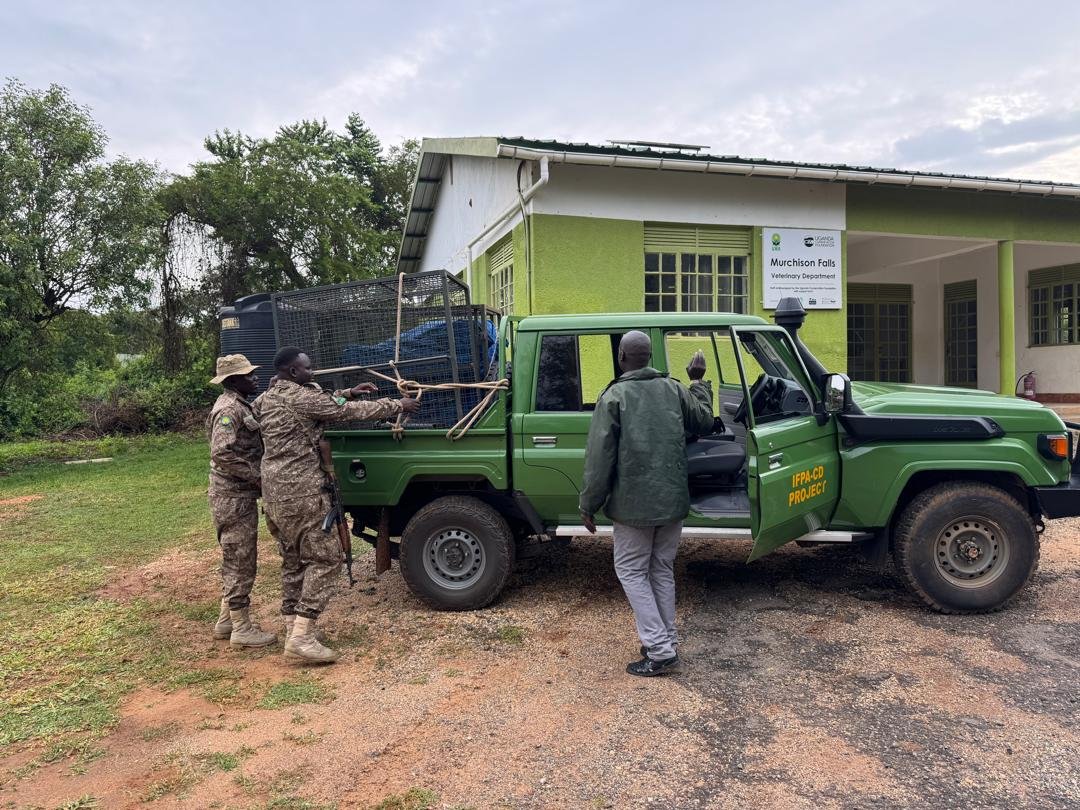
The guidance emphasizes calm and responsible behavior to minimize human-wildlife conflict, protect lives and prevent unnecessary harm to wildlife.
As wild animals occasionally move beyond their natural habitats in search of food, water or suitable environments, members of the public are encouraged to observe the UWA Wildlife Sighting guidelines rather than attempting to handle the situation themselves.
UWA Wildlife Sighting Guidelines: What to Do
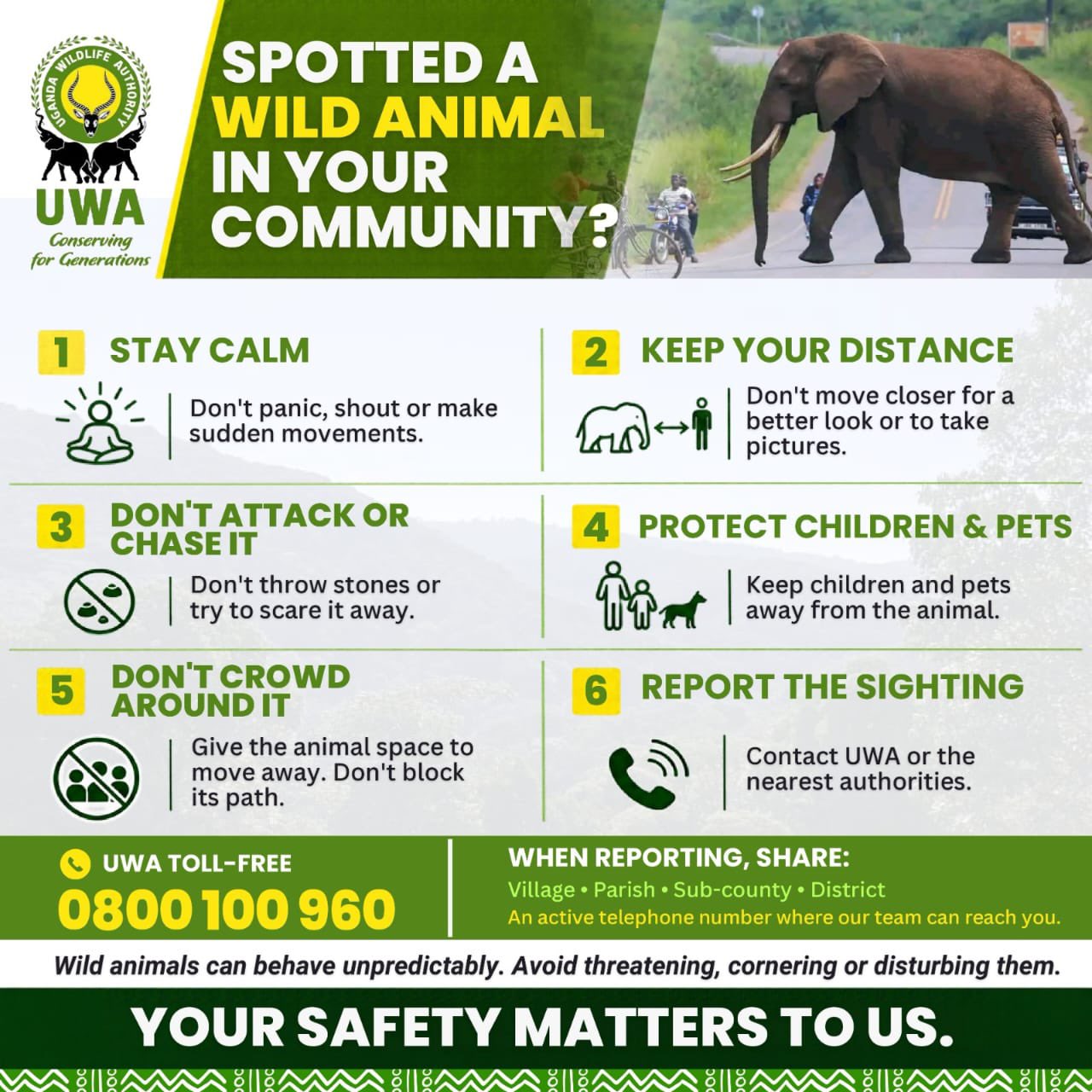
UWA highlights several important precautions that members of the public should follow when encountering wild animals in their communities:
1. Stay Calm
Avoid panicking, shouting or making sudden movements that could frighten or provoke the animal.
2. Keep Your Distance
Maintain a safe distance and avoid approaching the animal, regardless of its size or apparent behavior.
3. Do Not Attack or Chase the Animal
Never throw objects such as stones at, threaten, attack or attempt to chase the animal away. Such actions may provoke defensive behavior and increase the risk of an encounter.
4. Protect Children and Pets
Keep children and domestic animals away from the animal. Ensure that they remain in a secure location until the situation is resolved.
5. Do Not Crowd Around the Animal
Avoid gathering around the animal or attempting to take photographs from close range. Give it enough space to move without feeling threatened.
6. Report the Sighting
Immediately report the animal’s presence to the relevant UWA authorities so that trained wildlife personnel can assess the situation and provide an appropriate response or the nearest authorities such as Police with your village, parish, sub-county, district and a mobile telephone number details for easy tracking.
UWA Wildlife Sighting Guidelines: Human-Wildlife Coexistence in Uganda
The UWA Wildlife Sighting guidelines highlight the importance of responsible community behavior in managing human-wildlife interactions. As Uganda continues to promote wildlife conservation and nature-based tourism, ensuring that communities understand how to respond to unexpected wildlife encounters remains essential.
Responsible reporting and cooperation with wildlife authorities can help prevent injuries, reduce conflict and support the protection of Uganda’s rich biodiversity.
Members of the public are therefore encouraged to remain vigilant, follow established UWA Wildlife Sighting guidelines and allow trained wildlife personnel to handle wildlife-related incidents.
Plan Your Uganda Wildlife Experience
Uganda is home to remarkable wildlife experiences, from mountain gorilla trekking in Bwindi Impenetrable National Park to wildlife safaris in Queen Elizabeth National Park, Murchison Falls and other protected areas.
At Silverback Gorilla Safaris, we encourage responsible wildlife tourism that prioritizes visitor safety, community awareness and wildlife conservation.
Feel free to contact our team at info@silverbackgorillasafaris.com for more information and assistance.