
Where to see lions in Uganda: Spotting a lion in its natural habitat is a bucket-list dream for any wildlife enthusiast.
In Uganda, this magnificent apex predator can be found primarily across three premier savannah national parks: Queen Elizabeth, Murchison Falls, and Kidepo Valley. Each location offers a unique, thrilling, and hyper-specific backdrop for tracking the King of the Jungle.
The Crown Jewel of Predators: Lions in Uganda
The East African lion (Panthera leo leo) represents one of the most sought-after species for safari-goers globally. While mountain gorillas are often the primary draw for eco-tourism, the open savannahs of Uganda provide a spectacular contrast.
Seeing a wild pride resting under an acacia tree or a coalition of males surveying their territory is a quintessential African wildlife experience.
However, lion populations require vast territories to hunt and thrive, and their numbers have faced challenges due to human-wildlife conflicts.
Conservation efforts across Uganda are heavily focused on protecting these big cats. Today, Uganda’s lion populations are primarily concentrated in the country’s expansive, protected conservation areas, where dedicated wildlife authorities actively monitor and protect them.
Where to See Lions in Uganda -3 Best Destinations
1. Queen Elizabeth National Park: The Home of Tree-Climbing Lions
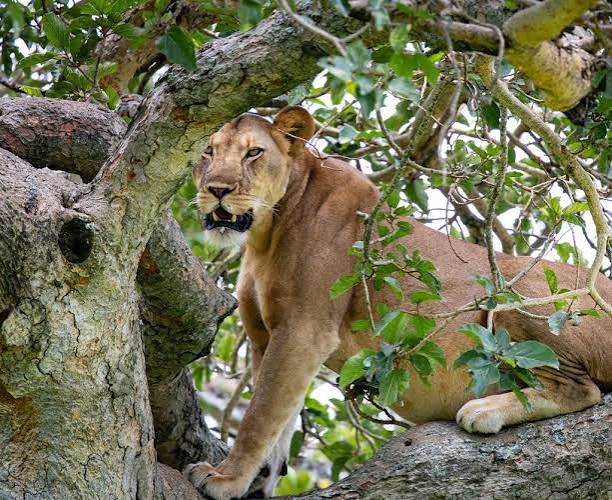
Located in the western region of the country, spanning the districts of Kasese, Kamwenge, Rubirizi, and Rukungiri, Queen Elizabeth National Park is arguably the most famous destination where to see lions in Uganda. This diverse ecosystem encompasses sprawling savannah, shady acacia woodlands, and sparkling crater lakes, making it a perfect haven for big cats.
The Kasenyi Plains: Where to see Lions in Uganda hunting prey.
The Kasenyi sector, located on the northern side of the park, is renowned as the primary breeding ground for the Uganda Kob.
Because Kobs are the primary prey for lions, the Kasenyi Plains provide an exceptionally high concentration of predator activity.
Early morning game drives here offer visitors a chance to have clear views of where to see lions in Uganda actively hunting or lounging in the golden grasses shortly after dawn.
The Ishasha Tree-Climbing Lions in Uganda.
One of Uganda’s most iconic wildlife phenomena is found in the remote southern sector of the park: the Ishasha tree-climbing lions.
Along with parts of southern Tanzania, Ishasha is one of the only places on the planet where to see lions in Uganda and they have made a habit of climbing into the branches of large fig trees.
Researchers and wildlife biologists suggest several theories for this unique behavior:
- Escaping the Heat: The sprawling branches provide a cool breeze and shelter from the intense midday heat.
- Avoiding Biting Insects: Being elevated in the canopy keeps these cats away from pesky ground-dwelling flies and annoying tsetse flies.
- Elevated Vantage Point: The branches provide a high vantage point to spot unsuspecting Uganda Kobs and buffaloes in the distance.
Lion Tracking Experiences
For visitors seeking a deeper, more scientific experience, the park offers a dedicated Lion Tracking Experience. Managed by the Uganda Wildlife Authority (UWA) and local carnivore projects, this activity allows a limited number of guests to accompany researchers into the field.
Researchers use radio-tracking equipment to locate dominant lionesses wearing tracking collars, transforming a standard game drive into an intimate, educational, and conservation-focused encounter.
2. Murchison Falls National Park: The Mighty Northern Sector
Covering over 3,840 square kilometers in northwestern Uganda, Murchison Falls National Park is the country’s largest protected area and boasts the highest estimated population of lions, roughly around 250 individuals.
The park is bisected by the Victoria Nile, which forces its way through a narrow, 7-meter gorge to create the world-famous waterfall that shares its name.
Lions in Murchison Falls are predominantly found in the northern sector, specifically on the palm-dotted savannah plains of the Buligi Circuit.
This area stretches between the Victoria Nile and Lake Albert and provides an expansive, open-country hunting ground.
Where to see Lions in Uganda in Murchison Falls National Park
When embarking on a game drive in Murchison Falls, you will travel with a professional, experienced guide who knows the topography well.
Lions in this area often blend perfectly into the tall grasses or rest under the sprawling branches of Borassus palms.
A classic, comprehensive safari itinerary usually includes a morning game drive in the Buligi sector, followed by an afternoon boat cruise to the base of the falls, giving you a chance to see both predators on land and the massive Nile crocodiles and hippos in the water.
3. Kidepo Valley National Park: The Wilderness Frontier
For those willing to travel off the beaten path, Kidepo Valley National Park in the extreme northeastern corner of Uganda offers an unparalleled, remote wilderness experience.
Nestled between the borders of South Sudan and Kenya, this park feels completely untouched by modern mass tourism.
Kidepo features rugged, mountainous terrain and vast, open valleys, including the Narus Valley. The Narus Valley holds the park’s primary water source, making it a magnet for large herds of buffalo, elephants, and various antelopes.
Wherever there is a high concentration of prey, predators are never far behind. Kidepo’s lion population is incredibly healthy, and the dramatic backdrop of the Morungole Mountains makes it a photographer’s paradise. You can spot these cats perched on massive, ancient rocks (reminiscent of the iconic Lion King landscape) or prowling through the gold and green grasses of the valley.
Best Time to go for Lion Viewing
While lions are present in Uganda year-round, your likelihood of encountering them is heavily influenced by the seasons.
The dry seasons, which run from June to August and from December to February, are universally considered the best times for wildlife viewing.
During these dry months, rainfall is minimal, which impacts the environment in two crucial ways:
- Vegetation is Thinner: The savannah grasses become shorter and sparser, making it much easier to spot a tawny lion resting in the shade or moving through the brush.
- When water runs dry, animals must gather near the few remaining rivers and shrinking pools. This forces lions to wait at these predictable spots to easily find resting or hunting prey.
Conversely, during the wet seasons (usually March to May and September to November), the savannah becomes lush and green.
The vegetation grows very tall, providing abundant cover for predators and allowing them to easily evade tracking vehicles.
The rains can also make certain dirt tracks muddy and difficult to navigate, although the parks remain open and the scenery is brilliantly vibrant.
Conservation and the Economic Impact
Where to see Lions in Uganda is not just a thrill for the traveler; it is a critical pillar of the East African economy.
A 2006 assessment by the Wildlife Conservation Society (WCS) estimated that a single, living lion in Queen Elizabeth National Park generated around $13,500 USD annually for the national economy through tourism revenue.
Today, conservation initiatives emphasize community-based tourism, ensuring that local communities such as those bordering Kidepo and Queen Elizabeth reap the financial benefits of wildlife preservation.
By directly paying for park entrance fees, engaging with local guides, and supporting conservation-focused tracking programs, safari visitors play a vital role in ensuring that these lions are protected for future generations.
Essential Tips for Your Safari
To maximize your chances of spotting a lion, keep these practical tips in mind:
- Hire a UWA Ranger: Hiring an official Uganda Wildlife Authority (UWA) ranger to accompany you in your vehicle is highly recommended. They have a deep understanding of animal behavior, know the latest sightings where to see Lions in Uganda, and can spot camouflaged wildlife that untrained eyes might miss.
- Go Early or Late: Lions are primarily crepuscular and nocturnal, meaning they are most active during the early morning and late evening. During the heat of the day, they will seek deep shade and remain largely inactive.
- Bring Good Optics: A reliable pair of binoculars and a camera with a good telephoto lens are indispensable, as lions often rest far away from the designated game tracks.
- Be Patient: Safari driving is an exercise in patience. Spending 30 to 45 minutes near a pride in the hopes of seeing them wake up, stretch, or become active often yields the best photographic rewards.
In conclusion, whether you are looking for the tree-climbing prides of Ishasha, the sheer volume of big cats in Murchison Falls, or the raw, untamed wilderness of Kidepo, Uganda offers some of the most dynamic lion-viewing experiences on the African continent. Every national park offers a different landscape, allowing travelers to build a diverse and unforgettable wildlife journey.